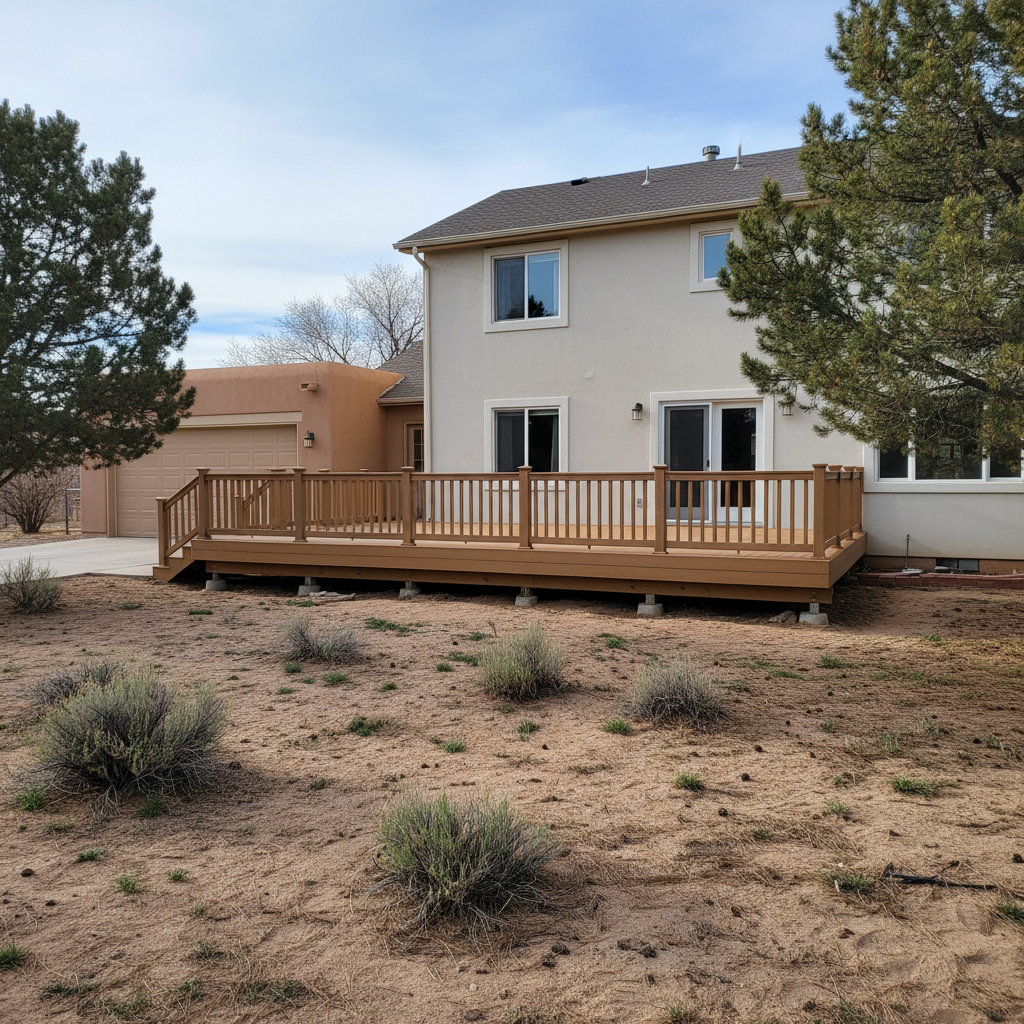
Most people shopping for a deck builder put three bids side by side and pick the middle number. That works fine for a lot of home projects. It doesn't work well for a deck, because the difference between a $9,000 bid and a $14,000 bid is usually buried where you can't see it: how deep the footings go, what's holding the ledger board to your house, and whether anyone pulled a permit at all. In Las Cruces specifically, the ground and the climate here punish shortcuts in ways that take a year or two to show up.
What the ground around here actually does
A lot of lots in the Mesilla Valley have a layer of caliche somewhere under the topsoil, a hardened calcium carbonate layer that can start anywhere from a foot down to several feet, depending on the street. It's basically natural concrete. A post hole digger bounces off it. Builders who know the area carry a carbide-tip auger or a hand breaker and budget the time for it. Builders who don't know the area, or who underbid the job to win it, sometimes stop short of solid bearing soil and just backfill. That footing looks fine on installation day and starts to rock within a season or two.
Footings for a typical residential deck here need to land below the loose fill and sit on undisturbed soil, usually somewhere around 24 to 36 inches depending on the post spacing and the load. Frost depth isn't the big driver in this part of New Mexico the way it is further north, we do get freezing nights from December into February, but the ground doesn't heave the way clay soil does in wetter climates. The bigger issue is caliche and loose fill, not frost.
Permits aren't optional, and a good builder won't act like they are
Decks attached to the house, decks over a certain height, and most covered structures need a permit through the City of Las Cruces Building Safety Division, or through Doña Ana County if the property is outside city limits. An inspector will usually want to see the footing holes before concrete goes in, then come back for framing, and again for a final once railings and stairs are up. Any guardrail on a deck more than 30 inches above grade has to meet code height, generally 36 inches, with baluster spacing that keeps a 4-inch sphere from passing through.
If a builder tells you permits are a waste of money or that "nobody checks on decks," that's a sign to walk. Skipping the permit doesn't just risk a fine. It means nobody with no stake in the sale ever looked at the footings, the ledger attachment, or the railing before you started using it. If you're in one of the newer subdivisions out toward Sonoma Ranch or Red Hawk, there's also likely an HOA with its own rules on setback, color, and sometimes materials, separate from the city permit. Older neighborhoods closer to downtown or Mesilla rarely have that extra layer, but they often have block or adobe exterior walls, which change how a ledger board gets attached and sometimes mean the deck needs to be self-supporting instead of ledger-hung at all.
What a serious bid actually spells out
A bid that just says "build 300 sq ft deck, pressure treated, $7,800" doesn't tell you much. Ask for the specifics in writing:
- Footing depth and diameter, and whether it's based on soil they've actually checked or a guess
- Post size and spacing, joist size and spacing (16 inches on center is standard for most decking, some composite boards require 12 inches)
- How the ledger attaches to the house, and whether flashing is included, this is the single most common failure point on older decks
- Fastener type, stainless or coated for exterior exposure, not just whatever was in the truck
- Who pulls the permit and whose name is on it
- Timeline, including how many days before you can safely walk on it if there's a concrete pour involved, usually a few days minimum before foot traffic, longer before heavy loads
If a contractor won't put these things in writing, or gets vague when you ask, that tells you something. A builder who's done the work before can answer these questions in about thirty seconds without looking anything up.
Red flags worth walking away from
A few things that should end the conversation, not slow it down:
- Asking for the full payment upfront, before material is delivered
- No written contract, or one that doesn't list the materials by size and species
- No mention of a permit, or a vague "we'll take care of that" with no paperwork to show for it
- A bid that's noticeably lower than two others with no explanation, usually means something gets skipped, often the footing depth or the flashing
- Pressure to sign today because of a "limited time price"
None of these guarantee a bad outcome every time. But stacked together, they're how a deck ends up with a wobble in the railing by year three.
Materials and the sun
Las Cruces gets over 300 sunny days a year and summer surface temperatures on a deck board can run well above the air temperature. That matters for material choice more than people expect. Untreated or lightly stained wood will gray and crack faster here than in a humid climate, because UV breaks down the lignin and there's little moisture to slow it. Composite decking holds color longer but can still get hot enough to be uncomfortable barefoot in July, and darker colors run hotter. Whatever you choose, ask how often it needs resealing or restaining in this climate, the honest answer for wood is usually every 1 to 2 years, not the 3 to 5 years you'd hear in a milder climate.
Monsoon season, roughly July through September, brings short, hard downpours after months of dry weather. A deck built with good drainage underneath and proper slope away from the house handles that fine. One built flat, or one where the ledger flashing was skipped, is where you start seeing water staining on the siding by the second monsoon season.
None of this is complicated once you know what to ask. A deck builder who's worked the caliche, pulled permits with the city, and can talk through ledger flashing without hesitating has usually earned the job before the bid even gets written down. That's the kind of groundwork we do on every project at Ridgewood Outdoor Living, and it's worth asking any builder you're considering the same questions before you sign anything.